The most important points
Anyone looking for a flat as an investment in Berlin should not stop at the name of a district. Charlottenburg-Wilmersdorf stretches from City West to sprawling residential areas; Pankow encompasses both Prenzlauer Berg and neighbourhoods on the outskirts of the city. Even within a neighbourhood, demand, the condition of buildings and the quality of life can vary from street to street. There is therefore no single ‘best’ district for all investment strategies. It makes more sense to compare specific locations: what demand profiles are plausible? What are the asking rents in the district? And do the purchase price, condition and tenancy terms actually align? The following examples are intended as a guide, not as investment advice.
1: Define your strategy and key figures
Before you compare individual Berlin districts, establish three things: your investment horizon, your financial capacity and the purpose of the flat. Is it intended to be let on a long-term basis? Do you wish to keep open the option of using it yourself at a later date? Or is the main priority that the running costs fit in with your financing? These objectives do not automatically lead to different districts, but they do influence which characteristics of a property are important.
Advertised rents can help with an initial comparison. The IBB Housing Market Report 2025 shows an average advertised rent for Berlin of 15.78 euros per square metre per month. The figures vary by district: for Mitte, the IBB quotes 20.00 euros; for Friedrichshain-Kreuzberg, 19.40 euros; and for Charlottenburg-Wilmersdorf, 19.17 euros. Pankow stood at 17.00 euros, Tempelhof-Schöneberg at 15.79 euros, Steglitz-Zehlendorf at 15.00 euros, Neukölln at 13.61 euros, Lichtenberg at 13.33 euros and Spandau at 12.50 euros per square metre.
These are asking rents taken from publicly available property listings – not the actual rents for all flats, nor rental yields. They do not indicate what purchase price you would pay, nor what rent can legally and realistically be charged for a specific let flat. A district with a higher asking rent is therefore not automatically the better investment.
2: A comparison of Berlin locations
The following examples categorise selected Berlin locations according to residential profile and advertised rents. They do not constitute a ranking: the specific micro-location and the figures for the individual property remain the decisive factors.
Charlottenburg-Wilmersdorf and Mitte: central demand, high barrier to entry
Charlottenburg-Wilmersdorf is not a homogeneous sub-market. The district combines central amenities in City West with quieter and, in some cases, spaciously developed residential areas. The average asking rent in 2025 stood at 19.17 euros per square metre. In Mitte, the figure was 20.00 euros – the highest district figure in the IBB report. These figures describe the asking rent, not the achievable net yield. With correspondingly high purchase prices, a high rent alone cannot justify the investment.
For investors who are considering a wide range of residential locations and the potential for future resale, these districts may be worth adding to their shortlist. However, be sure to examine the individual property: maintenance requirements, floor plan, service charges and actual condition can have a greater financial impact than a well-known address. To get a feel for the differences within Charlottenburg – for example, between Savignyplatz, Lietzensee and Klausenerplatz – the Charlottenburg City Guide is a good place to start. For the diverse neighbourhoods and types of housing in Mitte, read the Mitte City Guide. These profiles are no substitute for a property inspection.
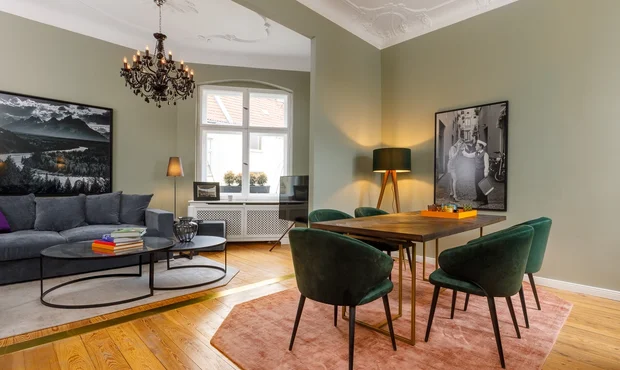
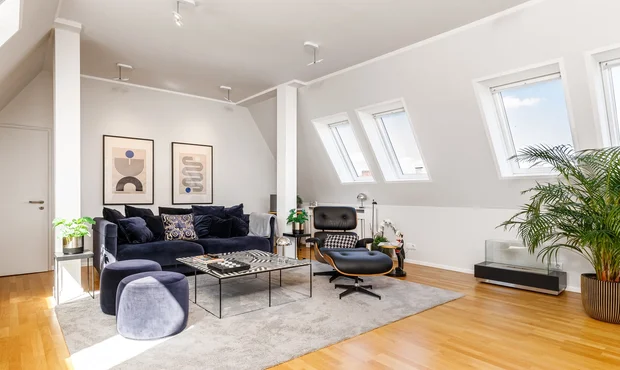
Visit our property search for more property listings.
Friedrichshain-Kreuzberg: high asking rents, but no guarantee of returns
According to the IBB, Friedrichshain-Kreuzberg recorded an average asking rent of 19.40 euros per square metre in 2025. This is the second-highest figure among the districts. At the same time, the district is densely populated and characterised by a high proportion of older and post-war buildings. A high asking rent may indicate a high level of rents in property listings, but it does not prove that a specific flat can be let at that price or that the purchase price is attractive.
The address is particularly important here: traffic noise, the condition of the building, current rents and the legal framework can vary between neighbourhoods and even between neighbouring streets. Check comparable properties in the same area and factor in the tenancy agreement, rent index and any potential restrictions when making your calculations. The Friedrichshain City Guide provides an insight into the different residential and neighbourhood profiles. For Kreuzberg, you should specifically include the exact micro-location; the district cannot be deduced from the Friedrichshain profile.
Visit our property search for property listings.
Neukölln: a borough with significant differences between north and south
Neukölln combines neighbourhoods close to the city centre in the north with residential areas extending to the southern outskirts. In 2025, the average asking rent stood at 13.61 euros per square metre, which, according to the IBB report, was below the overall figure for Berlin. At the same time, it fell compared with the previous year. This is an indication of the trend in the listings surveyed, but it is neither a forecast for individual neighbourhoods nor evidence of a higher return on investment.
When considering a property investment, you should therefore not automatically assume that the property will ‘appreciate in value’. Instead, ask what specific demand matches the flat and whether the purchase price, existing tenancy agreement, condition and potential investments are viable. The Neukölln City Guide describes various neighbourhoods, including Schillerkiez and Richardkiez. Compare the immediate surroundings on site at different times of day and take the legal tenancy situation into account in your assessment.
Pankow and Prenzlauer Berg: don’t confuse the neighbourhood with the whole borough
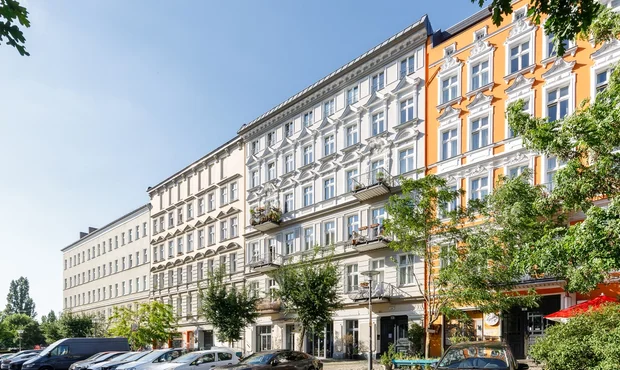
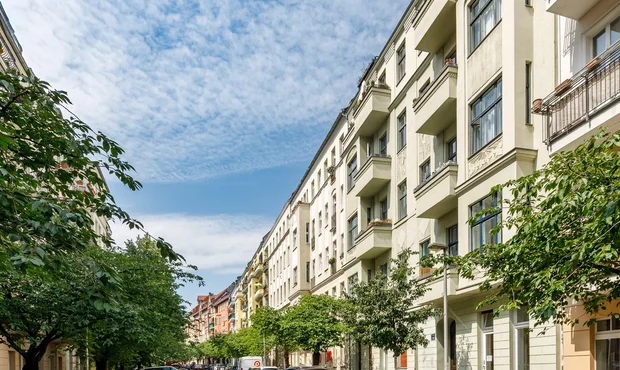
Pankow stretches from the inner-city Prenzlauer Berg to more rural neighbourhoods on the outskirts of the city. The IBB report cites an average asking rent of 17.00 euros per square metre for the entire district in 2025. This figure does not apply specifically to Prenzlauer Berg. Anyone buying there should compare the specific property listings with suitable properties in the same micro-location.
Demand can vary depending on the type of flat and the surrounding area, and may come from different types of households. When assessing a property, therefore, the floor plan, condition of the building, transport links and the competition from comparable flats are more important than a blanket label such as ‘family-friendly’ or ‘popular’. The Prenzlauer Berg City Guide presents, amongst other things, the neighbourhoods around Kollwitzplatz, Helmholtzplatz and Winsviertel. Use it to narrow down potential locations for viewings – not as evidence of a specific trend in property values.
Visit our property search for more property listings.
Schöneberg and Steglitz: distinguishing between central and quieter residential areas
Schöneberg is part of the Tempelhof-Schöneberg district. The average asking rent there stood at 15.79 euros per square metre in 2025. Steglitz, on the other hand, is part of Steglitz-Zehlendorf, where the figure was 15.00 euros. These district figures should not be taken as the exact rent for Schöneberg or Steglitz. They merely show that even neighbourhoods situated close to one another cannot be summarised by a single average figure.
Anyone looking for a central location with an established residential environment can compare Schöneberg with specific neighbourhoods in other inner-city districts. Those looking for quieter residential streets or with a view to eventually living there themselves may also want to consider Steglitz. The key factor remains whether the flat in question suits the intended target group and the budget. The Steglitz City Guide provides an overview of Schlossstraße, the Bismarckviertel and the southern end of the district. Supplement this district overview with current listings and a viewing.
Visit our property search for property listings.
Wedding, Lichtenberg and Spandau: Price levels are only part of the equation
Wedding is a neighbourhood within the Mitte district and not a separate administrative district of Berlin. Consequently, the IBB’s listed rent for Mitte cannot simply be applied to every flat in Wedding. The Wedding City Guide illustrates how differently areas such as the Brunnenviertel, the African Quarter and the Soldiner Kiez are described. When it comes to investment, it is the specific address that counts, not the neighbourhood’s reputation.
For Lichtenberg, the median asking rent in 2025 stood at 13.33 euros per square metre; at the same time, the IBB reports a sharp decline for the district compared with the previous year. In Spandau, the figure was 12.50 euros. A lower rent level may go hand in hand with a lower purchase price, but this is not necessarily the case. Furthermore, lettability, maintenance and resale value can vary significantly depending on the property. You should therefore check actual asking prices and comparative rents for the same micro-location, rather than assuming a favourable entry price based on the district average.
3. What data investors should compare before buying
A useful district analysis begins with comparable properties. Compare the purchase price with the achievable net basic rent and factor in ancillary purchase costs, non-recoverable costs, maintenance and potential periods of vacancy. For a let flat, the current contractual rent is decisive; for a vacant flat, you must make legally permissible and realistic assumptions. A simple gross rental yield is merely an initial filter, not a complete investment analysis.
You should also check the documents from the owners’ association and the condition of the communal areas. Planned refurbishments or insufficient reserves can alter the calculations. For a general review of rental yields, financing and purchase documents, please also read our guide to property as an investment in Berlin. This article, however, delves deeper into a comparison of selected Berlin locations. You can use the City Guide Berlin alongside this to get to know individual neighbourhoods and their residential environments better.
The right district depends on the property and your strategy
Use district profiles and City Guides as a starting point. The specific address, the condition of the building and a realistic calculation are the decisive factors. Would you like to find out which Berlin location and which flat suit your plans? The team at coming home Sales will support you in your search and help you assess suitable offers and locations. Discover our flats in Berlin or get in touch with us – we’ll be happy to guide you through the next steps.