The most important points
Perhaps you’ve experienced this moment: you see a flat in Berlin that you like. A good location, a lovely old building, perhaps a balcony – and suddenly the thought strikes you: why not buy it? Instead of paying rent every month, the flat could, after all, end up belonging to you one day. And if you let it out, you might even get money back every month. That’s how simply the idea of buying your first property can begin. The real question, however, is a different one: is the flat actually a good investment? After all, a property can be a wonderful place to live and still not be a particularly good investment. It’s not just the purchase price and location that matter, but the interplay between rental income, financing, running costs, the condition of the flat and the owners’ association. And, of course, the question of what you actually hope to achieve by buying it.
1: Is buying a flat in Berlin a worthwhile investment?
The short answer: Yes, a flat in Berlin can be a worthwhile investment. But not automatically. Imagine two flats that, at first glance, appear equally attractive. With one, the current yield is right; with the other, it is the location and long-term demand that are particularly compelling. So which is the better option? That depends on what you hope to achieve with your investment. After all, ‘good investment’ is not a fixed seal of approval. The key factor is whether the purchase price, potential rental income, running costs and financial reserves fit in with your personal plans. And the time frame also plays a role: someone looking to build wealth in the long term will calculate things differently from someone who wants to generate a regular income as quickly as possible.
What strategy are you pursuing with your investment property?
Before you start clicking through property listings and comparing purchase prices, it’s worth asking yourself one very simple question: what do you actually want your property to do for you? Should it generate a regular income? Or do you want to build up your wealth in the long term and therefore place greater value on a good location and the potential for resale later on? Perhaps you might even want to move into the flat yourself at some point. That, too, can be a sensible strategy – after all, nobody knows today where they’ll be living in ten or twenty years’ time. Depending on your objective, the same flat may therefore be an attractive prospect for one investor but completely unsuitable for another. Your strategy helps determine which location, size, fixtures and fittings, and purchase price make sense. If you know this in advance, you’ll suddenly view properties through a completely different lens and save yourself a few viewings where it would be clear after just ten minutes: it’s lovely. But not for me.
2: Calculating rental yield – what the figures tell us
One of the first figures to consider when purchasing an investment property is the rental yield. A simple calculation is sufficient for an initial assessment: the annual net rent (excluding service charges) divided by the purchase price, multiplied by 100. This allows you to quickly assess a property – but that is all it tells you for the time being.
After all, the yield on paper takes no account of ancillary purchase costs, management fees or reserves. Nor can periods when a flat stands vacant simply be ignored. Only when these factors are factored into the calculation does it become clear what actually remains of the supposedly attractive return. And sometimes it is precisely the lower return that tells the more interesting story: a highly sought-after location with stable demand and a high-quality property can be a more solid long-term investment than a property that currently boasts an impressive percentage figure. The return is therefore an important starting point – but not a seal of approval.
The Berlin Purchase Price Factor: An initial guide for investors
The purchase price factor quickly brings two key figures together: the purchase price and the annual net rent (excluding service charges). Put simply, it shows how many years’ rent would be required, in theoretical terms, to cover the purchase price. This is certainly helpful when making an initial comparison of several flats.
However, a single figure does not in itself make for a sound investment. A low factor may indicate an attractive current yield – but it says little about whether the building is due for major refurbishment, how soundly the owners’ association is managed, or how sustainable demand for the location will be. Conversely, a higher factor may well be plausible in a particularly sought-after location. The crucial question is therefore not: Is the factor high or low? But rather: Does it match what this specific property can deliver in the long term?
Current property listings in Berlin
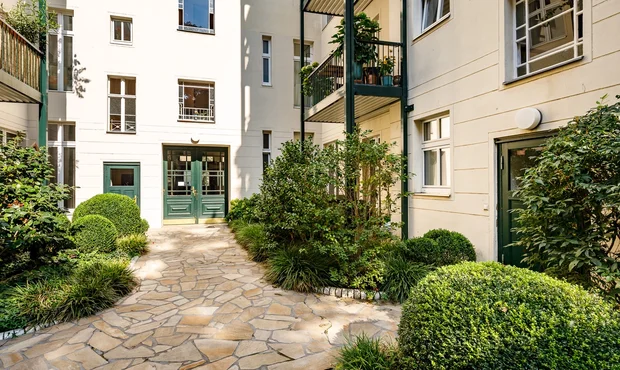
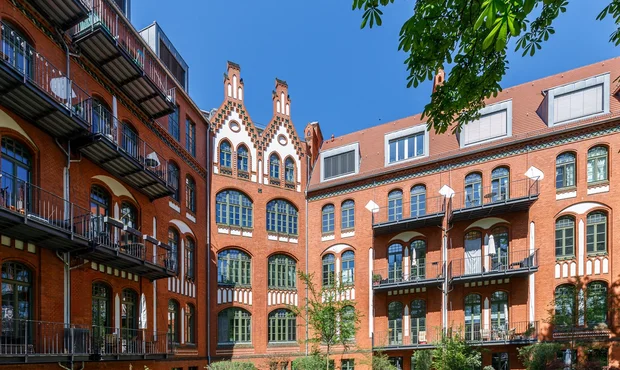
Please visit our property search page for further property listings.
3: Assessing the location of an investment in Berlin
When it comes to your own flat, the questions usually spring to mind straight away: Do I like the street? How far is it to work? Is there a good café just round the corner? When it comes to an investment property, you should think one step further. It isn’t you who needs to feel at home in the flat – it’s the people who will be renting it later on. It’s worth looking at the big picture and then the finer details. The macro-location shows how a district is developing: how good are the transport links, and what about infrastructure, jobs and educational opportunities? The micro-location extends right up to the front door. What’s happening on this street? Is it quiet or noisy? Are there shops and green spaces? How quickly can you get around by bus and train? In Berlin in particular, the picture can change within the space of just a few streets. One address may be highly sought-after, whilst the next may attract significantly less demand. Location is therefore not just a question of the neighbourhood – sometimes it really is the house number that makes the difference.
Not every sector is suited to every investment strategy
Anyone looking to invest in property in Berlin will soon come up against the question: which district is the best? The honest answer is: it depends on what you hope to achieve with the property. An established, highly sought-after location may be of interest if long-term stability is more important to you than the highest possible current return. In other neighbourhoods, however, it is precisely the return that may be the stronger argument in favour of an investment. That is why blanket rankings of Berlin’s districts are of limited use. The key factors are who will want to rent the flat in the future and how the immediate neighbourhood is developing. A compact flat near a university, for example, appeals to a different target group than a larger flat with a balcony and green spaces on the doorstep. And then there’s the personal perspective: perhaps you’d like to move into the flat yourself at some point, or sell it later on. A good investment should therefore not only work today – but, as far as possible, also fit in with what it might become tomorrow.
4: Buying a rented flat: What should you look out for?
A let flat has one obvious advantage to begin with: you don’t have to work out the future rental income from scratch. There is already a tenancy agreement, a tenant and a specific net rent excluding service charges. This makes the figures more tangible – but not automatically simpler. After all, when you buy the flat, you’re not just taking over the property itself, but also the existing tenancy. That’s why it’s worth taking a close look at the tenancy agreement: what is the current net rent excluding service charges? How long does the tenancy last? Is the rent subject to a sliding scale or indexation? And above all: does the current rent still reflect what is realistically achievable in this location?
It is precisely this last point that can be decisive when it comes to long-term calculations. The Berlin rent index, the specific location and the applicable legal framework – such as the rent cap – must therefore all be taken into account. A low rent is not automatically a bad thing, nor is a high rent automatically a good thing. What matters is whether it fits in with the property’s history and your budget.
Neighbourhood preservation and the rental market
A flat may look promising on paper – yet there are still limitations on its future development that you should be aware of before buying. In Berlin, this also includes ‘Milieuschutz’ (neighbourhood preservation). In social preservation areas, certain modernisation works or the conversion of rental flats into owner-occupied flats may be subject to special permits. This does not automatically mean that a flat in a neighbourhood preservation area is a poor investment. However, it may mean that some plans are not as easy to implement as they would be for a property outside such an area. Anyone planning, for example, a comprehensive modernisation or a subsequent conversion should therefore take a closer look. Simply checking the land register is not enough here. Sometimes it is also worth looking at the rules that apply in the immediate vicinity. You should therefore check before buying whether the specific address is located within a social preservation area and what regulations apply there. If you have any legal queries, your individual situation should be assessed by a specialist. After all, it would be frustrating to buy a flat with a specific plan in mind – only to discover afterwards that it cannot be carried out.
5: Financing an investment
Financing a property investment works slightly differently from financing the flat in which you live yourself. The bank takes into account not only your income and the monthly repayment, but also the rent that can be sustainably charged for the flat. Added to this are running costs, reserves and a financial buffer for times when the flat might be vacant or in need of repairs. The additional costs associated with the purchase must also be factored into the calculation from the outset. And with a flat in particular, you should set aside reserves for costs that cannot be passed on to the tenant – such as a special levy from the owners’ association or a major refurbishment. The most important question is therefore not how much financing is just about possible, but how much you can still comfortably afford even if things don’t go quite as smoothly as planned. Financing that only works under ideal conditions is rarely a good deal.
6: Check the property and the WEG before buying
When buying a flat, the due diligence process doesn’t stop at the front door. What happens in the stairwell, on the roof or in the cellar can be just as important for your investment as the condition of the bathroom and kitchen. After all, you don’t just own the flat, but also a proportion of the building. That’s why you should review the key documents before buying: the declaration of division, the management plan, the annual accounts and the minutes of past owners’ meetings. It is precisely in these documents that you may find clues that aren’t apparent during a viewing – such as planned refurbishments, an insufficient maintenance fund or special levies that are already on the horizon. The energy performance certificate and documents relating to previous refurbishments should also be on the table. After all, sometimes the most expensive aspect of a flat isn’t inside the flat itself, but a few floors up on the roof.
The key documents for your investment
The flat itself tells you only part of its story. You’ll find the rest in the documentation. The tenancy agreement and rent schedule show what income is actually generated. The land registry extract and declaration of division clarify the legal circumstances. The management plan, annual accounts and minutes of owners’ meetings reveal how the owners’ association is managed and what might lie ahead for the building. The energy performance certificate completes the picture by providing information on the property’s energy efficiency. The minutes, in particular, are often more revealing than one might initially expect. Clues about planned renovations, points of contention or future expenditure can be hidden amongst the agenda items and resolutions. Anyone who reads these documents carefully will therefore gain a much more complete picture of the property. For older buildings, an independent assessment of the building’s structural condition may also be worthwhile. The viewing shows what the flat looks like today. The documents reveal what it has been through so far and sometimes provide a fairly good indication of what lies ahead for you.
An investment in Berlin doesn’t have to be perfect. It should suit you, your financial situation and your goals. The key thing is that you not only know what you’re buying, but also understand why you’re buying it and what assumptions underpin your calculations. If you’d like to look into a specific flat in Berlin, our coming home Sales Team will be happy to help you assess the location, documentation and economic conditions. After all, a good investment isn’t recognised by the fact that it looks convincing at first glance – but by the fact that it still looks sound on closer inspection.
You should clarify these questions before making a purchase
- What do I want the property to achieve for me? Ongoing income, long-term wealth accumulation, or perhaps future owner-occupation?
- Is the purchase price right for the property? Don’t just look at the price per square metre; consider the overall figures.
- Is the rent realistic? Check the current rent, the rent index, the target tenant group and legal limits.
- What is the actual net return? Factor in ancillary purchase costs, non-recoverable costs, reserves and potential periods of vacancy.
- Can I manage the financing even if things go against me? Don’t just plan for the current situation; build in a financial buffer as well.
- What does the owners’ association say? Check the annual accounts, budget, reserves and minutes of owners’ meetings.
- What might become expensive in the future? Refurbishments, special levies, energy efficiency measures or other maintenance requirements.
- Is the location suitable for the target audience? Don’t just ask yourself whether you’d like to live there, but also consider who is likely to rent or buy the flat in the future.
- Are there any specific legal considerations? For example, social housing protection, rent controls or other regulations that apply specifically to this address.
- And the most important question: would I still feel comfortable with this decision if I were to work through the figures again tomorrow with a clear head?
Go through the checklist with us
These are precisely the questions we at coming home Sales deal with every day. Together with you, we’ll take a closer look at the property you’re interested in. Often, it’s the questions you don’t even think to ask at the start that make all the difference in the end. If you’d like, we’ll be there to guide you through the process. Contact us!
This article provides a general overview and is not a substitute for individual investment, tax or legal advice. If you have specific questions, we recommend having your particular situation assessed by a professional.